Introduction
Identity verification used to be a single checkpoint — a gate at the door. Today it's a continuous thread woven through every interaction a customer has with a business, from onboarding to the moment they call support. Getting that thread right is what separates trusted brands from the ones customers second-guess.
As fraud tactics evolve, so must the systems built to catch them. Businesses that treat verification as a one-time hurdle are already behind. The ones pulling ahead are building layered, adaptive trust into every step of the journey.

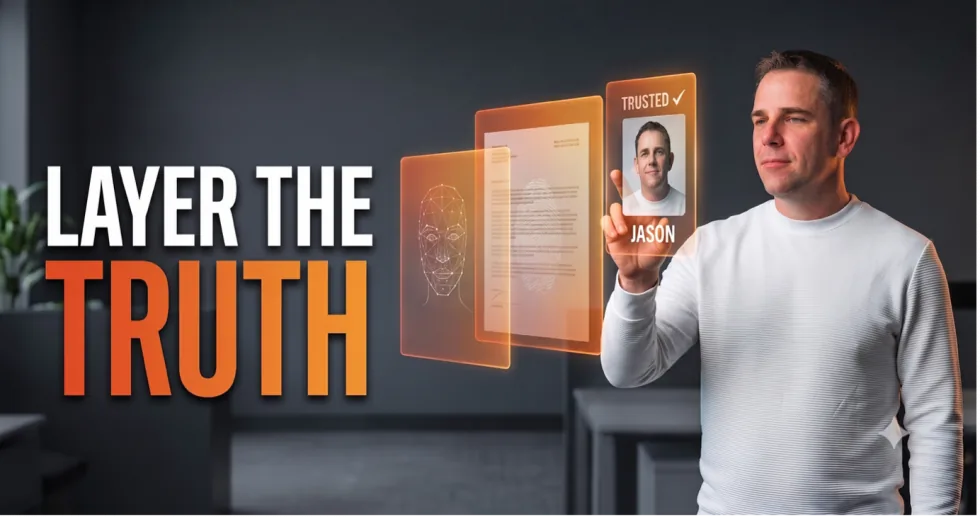
The strongest verification strategies don't ask customers to prove themselves once. They confirm identity quietly, continuously, and only step back in when something looks genuinely out of place.
That shift changes what "secure" even means. It's no longer about the strength of a single check — a fingerprint, a selfie, a one-time PIN — but about how well those signals are combined, weighted and re-checked as risk changes. A face match that passes in isolation can still sit inside a session riddled with other red flags.
"Trust isn't a checkbox you tick once at sign-up. It's a signal you keep earning, verification by verification, across the whole relationship."
Businesses that get this right don't just reduce fraud losses — they remove friction for the vast majority of legitimate customers who were never the problem in the first place. That's the real prize: security that customers barely notice, because it's built around them instead of in front of them.
Conclusion
Building trust through verification isn't about adding more checks — it's about making the right checks at the right moments, backed by data that gets smarter with every interaction. The businesses that treat identity as an ongoing conversation, not a single gate, are the ones customers will keep choosing.
That means investing in orchestration, not just point solutions — infrastructure that can pull in the right signal, from the right source, at the right time, without customers having to think about it.
The organisations that internalise this now won't just be safer. They'll be the ones customers trust enough to keep coming back to.
Share this

Shaun StrydomFounder & CEO, Contactable